
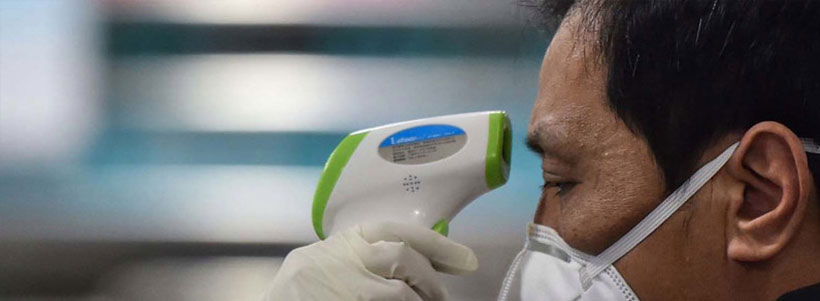
A Thermal body temperature measurement device provide a non-contact rapid screening to avoid cross infection and use a high precision body temperature measurement algorithm, with variety of hand-held and fixed over IP type for different application
It becomes essential after reopening the Businesses to Keep your staff and visitors safe from Novel coronavirus and as a part of LILAC Business continuity management strategy we offer a thermal camera, that detects people with fever symptoms and a proactive warning system for any critical cases passes under it.
Detection of persons/objects
Alarm in case of exceeding or falling below defined temperature ranges Event Triggers (alarm, network message, activation of a switching output) Screening via special TR windows or the complete sensor image Temperature range from -40 to +550 °C
Thermal Cameras vs. Infrared Temperature Guns
Not sure which type of skin temperature measurement device you need? Both devices measure infrared radiation from a surface and produce a resulting temperature, but what’s the difference? This guide should help you decide the best infrared temperature scanner for your needs.
Thermal Cameras:
- Highly accurate — some devices have a margin of error as low as ±0.1 °C
- Require a trained thermographer for proper use
- Produce images and videos with temperatures displayed on a monitor
- Measure temperature of every pixel in an image
- Scan temperatures from 3-10 meters away
- Include software
Temperature Guns (Non-Contact Infrared Thermometers):
- devices have a margin of error as low as ±0.3 °C
- More budget friendly
- Easier to use
- Produce temperature readings on an LCD screen
- Measure temperature of one spot
- Scan temperatures from 5-15 cm away
Applications:
Its highly recommended to use thermal cameras in high traffic facilities such as:
- Transportation means & stations (Airports, Railways, etc...).
- Public buildings such as (Courts, Municipalities, Ministries, etc…).
- Commercial centres & shopping malls.
- Stadiums & sport clubs.
- Hospitals.